

Who Needs AI Product Safety?
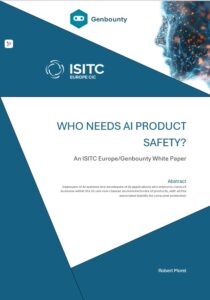
Why Every Business Leader Should Read “Who Needs AI Product Safety?”
Artificial intelligence is no longer just a buzzword or a futuristic concept, it’s a reality shaping our daily lives, our markets, and our legal systems. But with great power comes great responsibility. The new white paper, “Who Needs AI Product Safety?” by ISITC Europe and Genbounty, is a must-read for anyone deploying, developing, or even using AI systems—especially those operating in or with the European Union.
The Legal Earthquake: AI Is Now a Product
The European Union has redrawn the map for AI governance. With the introduction of the EU AI Act and the revised Product Liability Directive (PLD), any organization deploying or selling AI in the EU is now considered a manufacturer, directly liable for consumer protection. This means AI is no longer just code; it’s a product, subject to the same rigorous safety standards as cars, toys, or pharmaceuticals.
Why Does This Matter?
The risks of unsafe or deceptive AI are real and immediate: physical danger, psychological harm, fraud, illegal discrimination, and violations of fundamental rights. The EU’s new laws don’t just suggest best practices, they mandate robust safety assessments, transparency, human oversight, and clear documentation for high-risk AI systems. If an AI product is defective and causes harm, victims don’t need to prove negligence, just that the product was defective.
What’s at Stake for Businesses?
For businesses, AI product safety is now a mandatory engineering discipline, not a voluntary ethical guideline. Compliance is the ticket to market access and legal protection. The white paper lays out the urgent need for end-to-end AI safety processes, from initial testing and documentation to post-market monitoring and accreditation. Those who fail to adapt risk not only regulatory penalties but also significant financial and reputational harm.
Key Takeaways from the White Paper
- AI Product Safety Is Consumer-First: The primary beneficiaries are your customers. The focus is on protecting against tangible, real-world harms, not just hypothetical risks.
- Comprehensive Legal Framework: The EU AI Act and PLD work together to define what makes an AI product “defective” and how victims can seek compensation. The burden of proof is lower, and courts can demand technical evidence from firms.
- Global Ripple Effects: While the EU sets a strict, mandatory standard, other regions like the US are taking a more voluntary, market-driven approach. International standards such as ISO/IEC 42001:2023 are emerging to guide best practices worldwide.
- Practical Path to Compliance: The paper doesn’t just highlight risk, it offers a roadmap for organizations to build robust governance, integrate safety throughout the AI lifecycle, and achieve accreditation.
Who Should Read This?
- Business Leaders & Executives: Understand your new legal obligations and how to future-proof your AI strategy.
- AI Developers & Product Managers: Learn what makes a safe AI product and how to document compliance.
- Risk, Compliance & Legal Teams: Get up to speed on the latest EU regulations and international standards.
- Consumers & Advocates: Discover how new laws are designed to protect your rights and safety.
Ready to Dive Deeper?
Don’t wait for a compliance crisis or a headline-grabbing AI mishap. Download and read “Who Needs AI Product Safety?” today. Equip your organization with the knowledge and tools to navigate the new era of AI accountability.
Related Information Links
ISITC TalkTime Video: AI Regulatory Accreditation
Leave a Reply
You must be logged in to post a comment.